
ljn
ClickHouse Learnings
Learn what a machine learning pipeline is: best practices, use cases, and tools.
Written by
Meryem Cebeci
-

Introduction
Machine learning (ML) pipelines are essential for building efficient and scalable AI systems. They automate everything from data collection and preprocessing to model training and deployment, reducing manual work and improving consistency.
As businesses rely more on real-time insights, integrating streaming data into ML pipelines has become increasingly important. This enables dynamic predictions and smarter decision-making. In this article, we’ll break down the key concepts, benefits, tools, and real-time applications of machine learning pipelines, with a focus on Python-based implementations.
What is a Machine Learning Pipeline?
A machine learning pipeline is a sequence of automated steps that transform raw data into a trained model ready for deployment. It ensures that ML models can be developed, tested, and deployed efficiently, reducing human intervention and improving scalability.
Key Concepts of a Machine Learning Pipeline
Data Ingestion → Collecting and importing structured or unstructured data from various sources.
Data Preprocessing → Cleaning, transforming, and preparing data for modeling.
Feature Engineering → Selecting and extracting the most relevant features for training.
Model Training & Hyperparameter Tuning → Optimizing models for accuracy and efficiency.
Model Deployment → Making the model available for inference in a production environment.
Monitoring & Retraining → Continuously tracking model performance and updating as needed.
Real-Time Data Integration in Machine Learning Pipelines
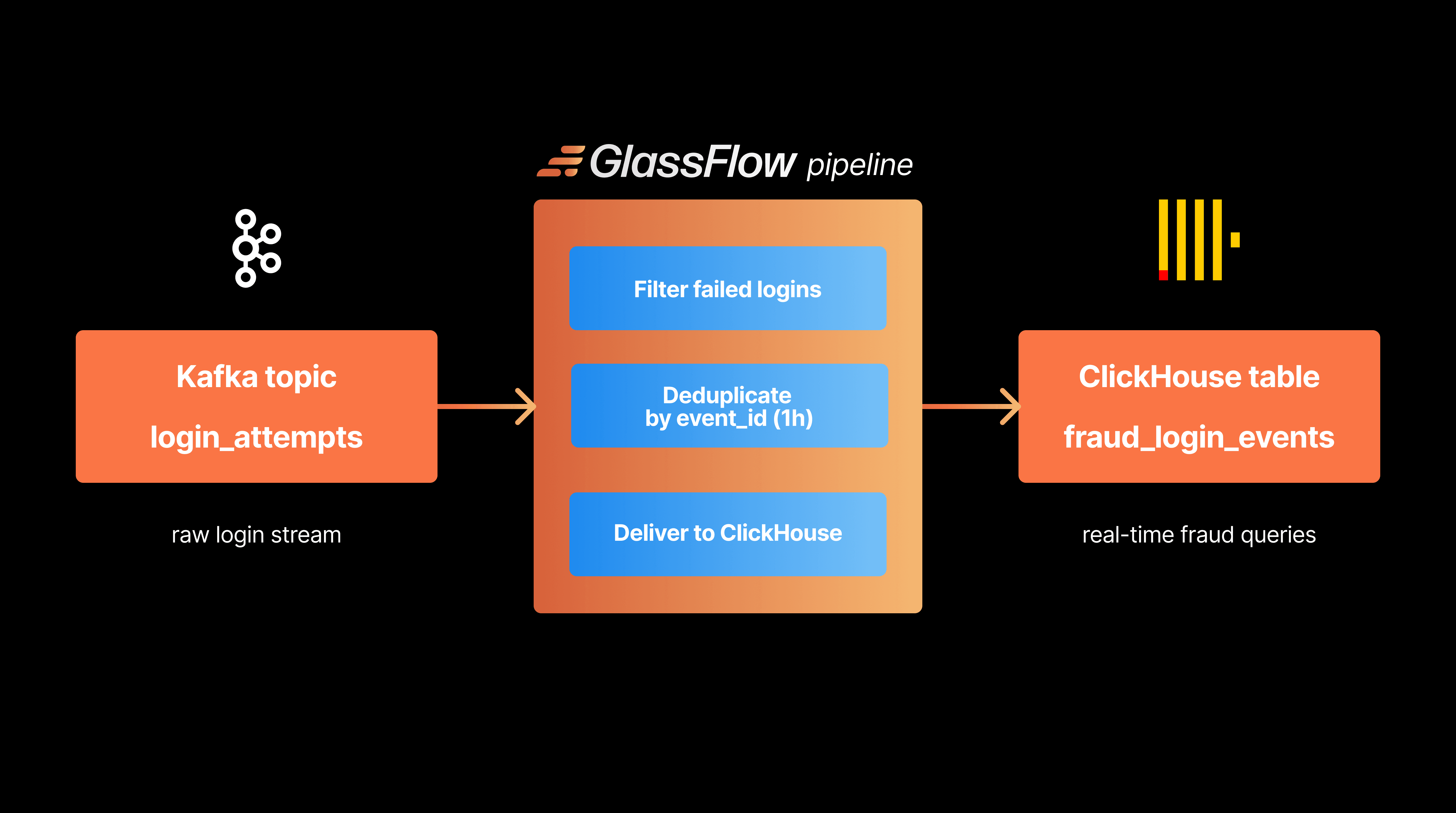
Traditional ML pipelines rely on batch processing, where models are trained on historical data. However, real-time ML pipelines integrate streaming data to enable instant predictions and adaptive learning. This is essential for applications like fraud detection, real-time personalization, and predictive maintenance.
Key real-time ML pipeline components include:
Streaming data ingestion (e.g., Kafka, GlassFlow, AWS Kinesis)
On-the-fly transformations for continuous model updates
Low-latency inference systems for real-time predictions
Why Use Python for Machine Learning Pipelines?
Python dominates the ML landscape due to its rich ecosystem, flexibility, and ease of use.
1. Rich Ecosystem of Libraries and Frameworks
Python offers powerful ML libraries like:
TensorFlow & PyTorch – Deep learning frameworks.
Scikit-learn – Classical machine learning algorithms.
Pandas & NumPy – Data manipulation and analysis.
GlassFlow – Real-time data transformation and movement for ML pipelines.
2. Ease of Use and Rapid Prototyping
Python’s simple syntax speeds up development.
Data scientists can quickly build and test ML models.
3. Flexibility and Scalability
Supports both batch and real-time ML workflows.
Scales from small projects to enterprise-level deployments.
4. Strong Community and Support
A vast open-source community provides ongoing improvements.
Extensive documentation and pre-built solutions reduce development effort.
📌 Python is the preferred language for ML pipelines. Learn more in our Python vs. Java for AI and ML comparison.
Key Components of a Machine Learning Pipeline
1. Data Preprocessing Tools and Techniques
Feature scaling & normalization (MinMaxScaler, StandardScaler)
Handling missing values (imputation, interpolation)
Dimensionality reduction (PCA, t-SNE)
2. Model Selection and Hyperparameter Tuning
Grid Search & Random Search – Finding the best hyperparameters.
Automated ML (AutoML) – Tools like H2O.ai and Google AutoML optimize model selection.
3. Model Deployment and Scaling
Flask/FastAPI – Exposing ML models via REST APIs.
Docker & Kubernetes – Scaling models in production.
Real-time deployment using GlassFlow to handle streaming inference.
Comparing Machine Learning Pipeline Tools
1. Performance and Scalability
Tool | Strength |
|---|---|
GlassFlow (This product is no longer available. Check out our latest solution.) | Real-time data movement & transformation for ML |
Apache Airflow | Workflow automation for batch ML pipelines |
Kubeflow | Scalable ML model deployment |
MLflow | Experiment tracking & model registry |
2. Ease of Use and Integration
GlassFlow simplifies real-time ML pipelines with Python-native integration. (This product is no longer available. Check out our latest solution.)
Airflow and MLflow offer modular, extensible frameworks for batch workflows.
3. Cost and Community Support
Open-source tools like Kubeflow and MLflow provide more flexibility but may require more management and resources.
Cloud-based solutions (e.g., SageMaker, Vertex AI) offer managed services but can be costly.
Real-Time Machine Learning Use Cases
1. Predictive Analytics in E-Commerce
Use Case: Dynamic pricing, demand forecasting.
Real-Time Advantage: Models adjust prices based on live consumer behavior.
2. Real-Time Fraud Detection
Use Case: Detecting fraudulent transactions in banking.
Real-Time Advantage: Streaming analytics instantly flags anomalies.
3. IoT Data Processing for Smart Devices
Use Case: Monitoring sensor data for predictive maintenance.
Real-Time Advantage: Devices can self-correct or send alerts based on real-time AI models.
Conclusion
Machine learning pipelines streamline data integration, model training, and deployment, enabling scalable AI solutions.
FAQs
What is a machine learning pipeline?
A machine learning pipeline is a sequence of automated steps that transform raw data into a trained, deployed ML model, ensuring efficiency and scalability.
How do real-time ML pipelines work?
Real-time ML pipelines work by integrating streaming data sources to make instant predictions and continuously update models without manual intervention.
Did you like this article? Share it!
You might also like

Data transformations at TB scale for ClickHouse
Get query ready data, lower ClickHouse load, and reliable pipelines at enterprise scale.
